Staff Spotlight | Lois Yamuta - Project Lead, Living Well Together.
- 28 Jan 2026

1. What inspired you to work in aged care and how did you come to lead the ‘Living Well Together’ program?
My career in aged care started in New Zealand. I was studying Healthcare Management, where I was also introduced to aged care nursing, and the rest is history!
I’ve always believed that aged care is a uniquely meaningful area of nursing. It involves supporting not just the clinical needs of each person, but also the broader aspects of their lives, including their families. This makes nursing in aged care both dynamic and deeply rewarding, as it allows you to connect with people in a truly holistic way. So, when I moved to Australia, it felt natural to continue working in the aged care sector.
I first joined Baptcare as the Living Well Together Registered Nurse (RN) at Wyndham Lodge (shoutout to my Residential Care Services Manager, Joyce Wanjiru Nyanjiru!). Not long after, I was offered the opportunity to lead the implementation of Living Well Together across our homes in Victoria and Tasmania.
2. What kind of training or education helped you prepare for your role as Project Lead?
A Bachelor of Nursing education certainly provided me with an array of skills, but training and experience in person-centred care and Montessori principles also helped in this role. The Project Lead role also entails teaching staff members, so the experience I gained as a manager and clinical educator definitely helped.
3. Explain the ‘Living Well Together’ program. How does it differ from traditional models of care?
In a nutshell:
Living Well Together is BaptistCare’s new model of care, which has now been rolled out to all Residential Aged Care (RAC) homes in Victoria and Tasmania. It was a collaboration between Baptcare and Monash University that is evidence-based and fully co-designed with residents, families and staff.
This model of care also supports our staff in shifting away from a task-oriented approach to care, towards a more person-centred approach. It enables our staff to work in a collaborative environment, to do things ‘with’ rather than ‘for’ residents. In a more collaborative environment, it is not only a clinical responsibility; this model of care also integrates non-clinical standards.
Every aspect of this model of care is aligned with the Strengthened Aged Care Standards.
It uses a Montessori approach that promotes choice, independence and function, and supports each resident’s abilities and skills. And because it is focused on person-centredness, we get to know the person’s preferences, choices, likes and dislikes, and, most importantly, what matters to them. This ultimately increases the quality of life of those we look after.
4. What does a typical day look like for you as Project Lead of this program?
As with any other nursing role, no day is the same and being proactive is important. Right now, in January, we have two RAC homes finishing with the implementation phase of Living Well Together, so I’m focused on that.
My role includes supporting homes from the time they implement Living Well Together, and continuing to provide guidance well beyond that initial phase. I deliver training and education for staff, support the site Living Well Together RNs, and conduct regular visits to our homes, especially during the evaluation process. Consultation meetings with site leadership teams can also occur for residents who require additional assessment and support with their Living My Best Life and Behaviour Support Plans.
5. What kind of impact are you seeing – on residents, families and staff – since implementing this approach?
We have seen multiple positive impacts since implementing the Living Well Together model of care.
Several staff have shared that they have a renewed sense of purpose. They’re no longer just coming to work to earn a living or to focus solely on their tasks; they feel more connected to the meaning behind what they do.
Each home has its own Living Well Together Champions – staff members who serve as valuable sources of expertise and support. One of our Personal Care Attendant Champions from Peninsula View, shared how proud she feels in her role. She enjoys coaching and encouraging new team members, especially those who are younger and beginning their careers in aged care. She also noted that building stronger relationships with our residents makes it easier for them to stop and listen carefully to what truly matters to the person.
Another story that stands out involves one of our residents from our Heritage Manor community in Morwell. He was semi-new to the home, and said it was a big change for him. He had lived a very active life and worked in the trades industry. So initially, he felt frustrated at being unable to do things now that he was older and was questioning his self-worth. Once the team completed their assessments and discussed how to support his well-being, they facilitated meaningful activities and domestic-type roles that restored his sense of being able to contribute, such as setting up the dining area with Food Service Assistants and Personal Care Attendants. When I spoke to him, he said it was not just about being able to help, but about being able to do things. These activities made him feel useful again and helped him feel that he was making a difference in his community at Heritage Manor.
Families have also shared positive feedback, saying how much they value and enjoy being involved in their loved one’s care. One example comes from a family member from our Hedley Sutton community. As part of our model of care, each resident’s room includes a memory box or frame – these can feature a special theme or be personalised to the resident, containing items of significance to them. One family member who lives in NSW and couldn’t visit her mother in person was especially moved. Despite the distance, she felt she could still contribute to her mum’s well-being by sending items for the memory box. She described it as an amazing initiative.
6. How do you involve residents in shaping their own daily experiences?
We involve residents in shaping their daily experiences by embracing a person-centred approach to care. This means promoting choice, maintaining clear communication about their needs and supporting resident-led initiatives.
It all begins with truly getting to know each individual. We use a range of assessment tools to support this, including the ‘Living My Best Life’ assessment, which is fully integrated into our Living Well Together practice. The insights we gain provide valuable baseline data that helps us tailor support to each resident.
I always encourage staff to engage in open, ongoing conversations with residents and to offer meaningful choices rather than making assumptions on their behalf.
We also have established channels to enhance resident experience, such as resident meetings, food focus groups and the involvement of resident representatives in our Consumer Advisory Group. Our team member, Kelsey Page, contributes to this work as well, gathering feedback through consumer surveys to ensure we’re always evolving to meet residents’ needs.
7. What’s been the most rewarding part of working with your team on this project?
Working closely with the different RAC teams, residents and families across Victoria and Tasmania has been incredibly rewarding. When you take a broader view, seeing the whole system rather than just individual parts, you’re able to learn more, adapt more easily, and develop a strategic approach that is tailored, rather than a “one size fits all” logic. I’ve also learned so much from the people I talk and work with, especially our residents. Their wisdom and life experience are invaluable, and once you understand what matters to them, you will know exactly how to ‘live well together’.
8. Where do you see ‘Living Well Together’ heading in the next few years? How will it evolve?
Our model of care has been designed to be dynamic, not static. We’re constantly learning from the stories and experiences of our staff and residents, and we continue to welcome those insights to improve how we deliver Living Well Together.
As we look ahead, implementing this model of care on a national scale will help align our practices with the values of our merged BaptistCare organisation. The qualitative and quantitative data from our Victorian and Tasmanian homes show that Living Well Together has had a significant positive impact, reflecting our vision of what aged care should be.
To sustain and expand this success, we’ll be leveraging collaboration across all departments to ensure our model of care is embedded not just in clinical care but throughout the organisation’s operations. With that alignment, Living Well Together can become a driving force in achieving BaptistCare’s broader goals and vision of reshaping aged care in Australia.
9. When you’re not at work, how do you like to spend your time? Any hobbies/creative projects that help you to recharge?
Being able to recharge is so important for me. Listening to music is how I usually do this. In my free time, I play the guitar, go for walks to watch the sunset, or read books. Recently, I have been fond of surfing, and I plan to practice it more.
10. Are there any books, podcasts or tv shows you’re loving right now?
I’m a Swiftie since 2006, so her songs are always going to be in my playlist. Right now, I’m waiting excitedly for Bridgerton Season 4! I am also a host on a faith-based radio show that goes live every Sunday. We talk about different topics, so that is something I love too.
11. What advice would you give to your younger self?
You don’t have to figure it all out, take risks and do your thing, so you can live life with no regrets.
12. What advice would you give to someone who wanted to work in aged care?
Don’t be afraid or be intimidated. A career in aged care is deeply rewarding and the impact you have on the lives of older people is incredibly meaningful. You’ll hear remarkable stories from their life experiences, celebrate milestones like their wedding anniversaries and 100th birthdays and build relationships that foster compassion and purpose in your own life.
I always encourage people to explore the organisation’s values and see how they align with their own because that alignment can make a big difference in feeling supported and fulfilled. For nurses, there are great opportunities to pursue further studies and specialise in aged care.
If you are unsure about whether aged care is for you, there are plenty of micro-learning courses available to help you build more knowledge.
Thank you, Lois, for sharing your insights and for the dedication, compassion and leadership you bring to aged care every day. Your work is a powerful reminder of the impact that thoughtful, person-centred models of care can have on residents, their families and the staff who support them.
If you’re passionate about making a difference in the lives of older Australians, we’d love to hear from you. Explore career opportunities on the front lines of aged care by visiting our website here.
Community news
-
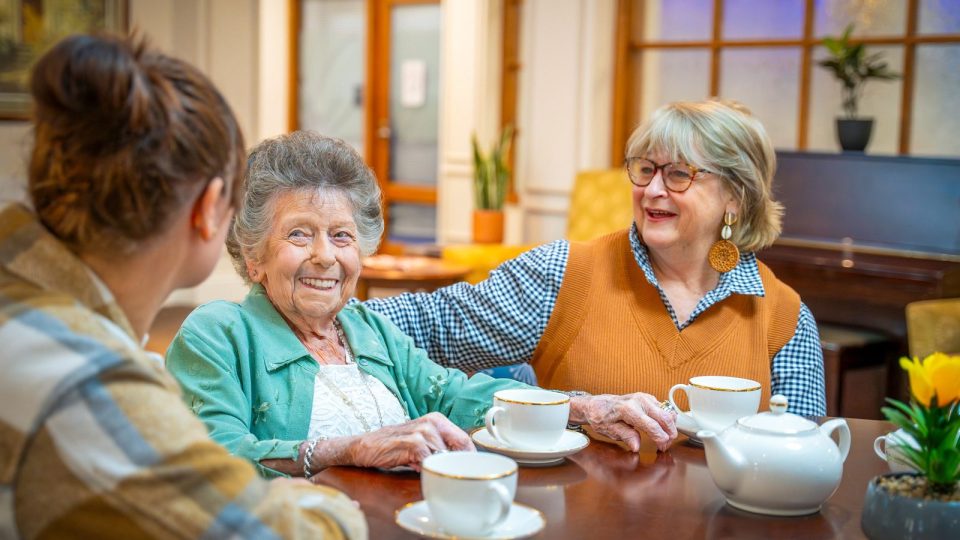
How to talk to a loved one about moving into aged care
One of the most challenging conversations we may have with our loved one is about whether it’s time to consider moving into residential aged care. Whether it’s a parent, grandparent, or partner, the topic can stir feelings of resistance and guilt. But when approached with empathy, patience and deep respect for the individual’s wishes, this conversation can become a meaningful step toward greater safety, comfort and connection.
- 18 Feb 2026
-
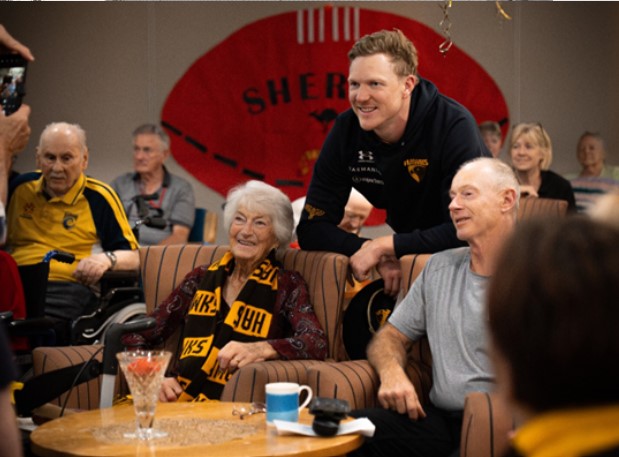
Hawthorn stars bring footy fun to Abbey Gardens
There was no mistaking the colours at Abbey Gardens Residential Aged Care Community in Warragul this week – brown and gold as far as the eye could see. Residents and staff donned their finest Hawthorn Football Club gear as players and support staff arrived for a visit, chatting with residents, signing autographs and bringing plenty of footy fun.
- 18 Feb 2026
-
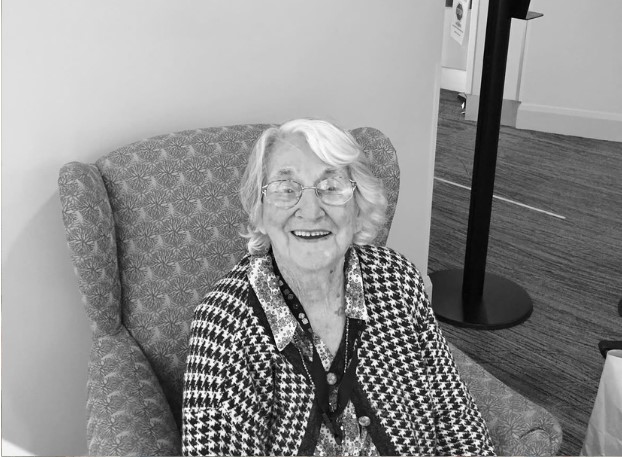
Dressmaker, traveller, Bulldogs fan and volunteer – Thelma turns 100!
Thelma Powell, beloved resident and former volunteer at Westhaven, turned 100 on 9th February 2026 with balloons, party hats, and cake! Surrounded by her family, care team, the local MP, and Mayor, as well as a representative from her beloved footy team, the Bulldogs, it was a day to remember.
- 13 Feb 2026